

Welcome to the VBY
200-Hour Online Yoga Training
Module 1: Intention & Foundation
This module will provide 30 hours of content related to Yoga Philosophy, Practice, and Teaching.
SECTION 1: Introduction to the Online 200HR Yoga Training
Welcome to the VBY 200hr Online Yoga Teacher Training! We are excited to share this work with you. This program will provide you with a series of live recorded lectures, audio & video practices, supplemental materials, and assignments. Stay tuned to your cohort-specific Google Classroom for announcements, including live session syllabi & Zoom meeting links, assignments, due dates, and more! If you have questions, reach out to your lead teacher directly at: leanne@virabhvayoga.com
Course Materials:
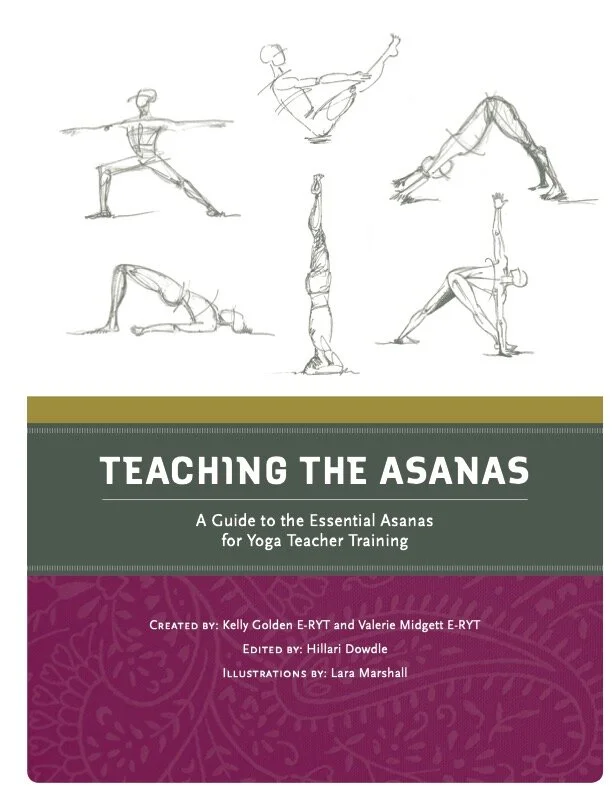
Digital Asana Manual: Download and/or print your Teaching the Asanas Manual prior to your first training weekend. You will be asked to reference this manual throughout this course as we break down 31 of the most common foundational asanas in our Asana Techniques & Methodologies sessions. We will discuss this more during our first live session.
Digital Student Workbook: Download and/or print your 230 Hour Teacher Training Student Workbook prior to your first training weekend. This workbook will be used in conjunction with all live & asynchronous training sessions.
If you would like to purchase a printed copy of either manual, please contact admin@virabhavayoga.com.
Required Reading List: Throughout this 6-month program, you will be asked to read part or all of the books listed below. Reading assignments will be given during live training sessions and via your cohort-specific Google Classroom. If you have questions about when each of the following books is needed, reference your Program Outline or reach out to your lead teacher.
Bringing Yoga to Life, Donna Farhi (to be read prior to our first weekend)
The Heart of Yoga, T.K.V Desikachar
The Bhagavad Gita, any translation
The Breathing Book, Donna Farhi
Yoga Sutras of Patanjali, any translation
Wheels of Life, Anodea Judith
Downward Dogs & Warriors, Zo Newell
Moving Inward: The Journey to Meditation, Rolf Sovik
Functional Anatomy of Yoga, David Keil
Yoga of Resilience, Kelly Golden
Getting Started: Before meeting with your cohort for your first live weekend, take some time to complete the following:

Pre-Training Reading Assignment: Read Bringing Yoga to Life: The Everyday Practice of Enlightened Living by Donna Farhi
Reflect & Consider: Write a 1-page reflection relating this text to your life. Submit in your cohort-specific Google Classroom.
Creating a Sacred Space: Watch this short video where Kelly explains the importance of creating & dedicating space for your practice & exploration throughout the course of your training. Take some time to create your space.
Satsang: We will begin all of our live training sessions with group satsang, where we gather in community to share our personal experiences through the lens of Yoga. Each session, we will explore a different theme together. For our first satsang, we will focus on the theme of Intention. In preparation for our discussion, use the space on p.5 in your Student Workbook to reflect on your intention for this training.
STOP.
Please do not proceed to Section 2 until after you’ve completed your first live weekend.
SECTION 2: Introduction to Yoga History & Philosophy
History & Foundations: Watch this video lecture & answer the questions on p.48 in your Student Workbook.
Yoga in the West: Watch this video lecture & answer the questions on p.49 in your Student Workbook.
Introduction to Sri Vidya Tantra: Watch this video lecture & answer the accompanying questions on p.50 in your Student Workbook.
SECTION 3: Foundational Asanas (Asana T&M)
These asanas are the essential building blocks of a strong physical practice. They provide much of the foundational instruction that we will build upon as we explore a wider variety of asana. These foundational postures teach us symmetry, and help us to become more aware of patterns of habitual asymmetry in our bodies. In addition, they are profoundly effective at strengthening and stabilizing our bodies, and are effective preparatory and counter poses to many other asanas.
Watch each of the following instructional videos for these foundational asanas. As you watch, practice each asana in your body and try out different modifications, adjustments, and self-assists. Follow along in your Teaching the Asanas Manual, making note of any questions, observations, insights, and discoveries.
Assignment: For each of the asanas below, write at least 3 teaching points (or alignment cues) in your own words.
1. Tadasana | Mountain Pose (p.9)
2. Balasana | Child’s Pose (p.11)
3. Adho Mukha Svanasana | Downward Facing Dog (p.13)
4. Savasana | Corpse Pose (p.15)
Assignment: Follow the instructions on p.74 in your Student Workbook to prepare a 3 minute Savasana that you will teach to the class in your next live session.
SECTION 4: Introduction to Yoga Anatomy
You should have received a brief overview of the structure of our Anatomy component during your first live weekend. If you missed this introduction, or if you have questions, please reach out to your lead teacher.
Assignment: Module 1 (Introduction & Overview)
Login to your Yoga Anatomy Course at www.yoganatomy.com
Complete Module 1, and be sure to mark it as completed before moving on to Module 2.
SECTION 5: Homework (due next live session)
Complete all above assignments, plus:
Read: Heart of Yoga by T.K.V. Desikachar (Part I)
Home Practice Log: Practice at least 5x/week, and document your practice. Submit one practice documentation prior to Module 2:
What did you practice? For how long?
How did it make you feel?
What did you notice?
Journal: Keep a journal near your practice space & make notes about any insights that arise both in your practice AND in your life. Turn in a copy of one journal entry prior to Module 2
Asana Sheets: Malasana
Using any and all resources available to you (including your own practice), fill in as much information on this form as you can for malasana. This is a way for you to expand your understanding of the asanas beyond what we do together. You can’t do it wrong!
Satsang: During our next satsang, we will focus on the theme of Foundation. In preparation for our discussion, use the space on p.6 in your Student Workbook to reflect on what you consider to be your foundation, both in practice & in life.
STOP.
Please do not proceed to Section 6 until after you’ve completed your next live session (unless otherwise directed by your lead teacher).
SECTION 6: Foundations of Teaching Yoga
Intro to Vinyasa Krama & Intuitive Sequencing: Watch this video lecture & answer the questions on p.33-34 in your Student Workbook.
Finding Your Voice: Watch this short discussion about cultivating your voice as a Yoga teacher, and complete the assignment on p.36 in your Student Workbook.
Principles of Prep & Counter Posing: Watch this video lecture & complete the assignment on pages 37 & 38 in your Student Workbook.
SECTION 7: Lateral Asanas (Asana T&M)
Lateral postures stretch and open the side bodies. Their movement is primarily asymmetrical and expressed on the lateral plane. Laterals are good preparations for backbends and are energetically stimulating and elevating to Prana Vayu. These postures strengthen and open the breath.
Watch each of the following instructional videos for this group of lateral asanas. As you watch, practice each asana in your body and try out different modifications, adjustments, and self-assists. Follow along in your Teaching the Asanas Manual, making note of any questions, observations, insights, and discoveries.
Assignment: For each of the asanas below, write at least 3 teaching points (or alignment cues) in your own words.
1. Virabhadrasana II | Warrior II Pose (p.19)
2. Trikonasana | Triangle Pose (p.21)
3. Parsvakonasana | Extended Side-Angle (p.23)
4. Ardha Chandrasana | Balancing Half Moon (p.25)
SECTION 8: Yoga Anatomy (Connective Tissue, the Muscular System, & Nervous System Principles)
Assignment: Modules 2 & 3 (Introduction & Overview)
Login to your Yoga Anatomy Course at www.yoganatomy.com
Complete Modules 2 & 3, including any associated reading assignments (Functional Anatomy of Yoga by David Kiel) & Module quizzes. Be sure to mark each section as complete before moving on to the next section!
Answer 3 discussion questions from each module, and bring your answers (as well as any questions, insights, inspirations or curiosities) with you to our next live session.
SECTION 9: Homework (due next live session)
Complete all above assignments, plus:
Read: The Breathing Book by Donna Farhi
Complete the exercise (Where Do I Breathe?) on p.36
Home Practice Log: Practice at least 5x/week, and document your practice. Submit one practice documentation prior to Module 2:
What did you practice? For how long?
How did it make you feel?
What did you notice?
Journal: Keep a journal near your practice space & make notes about any insights that arise both in your practice AND in your life. Turn in a copy of one journal entry prior to Module 2
Asana Sheets: Vasisthasana
Using any and all resources available to you (including your own practice), fill in as much information on this form as you can for vasisthasana. This is a way for you to expand your understanding of the asanas beyond what we do together. You can’t do it wrong!
Module 1 Quiz: Once you have completed all Module 1 coursework, please complete this Quiz to check for understanding. This helps us to get a better understanding of what we might need to review or revisit, and don’t worry- you simply cannot fail!
Satsang: During our next satsang, we will focus on the theme of Study. In preparation for our discussion, use the space on p.7 in your Student Workbook to reflect on your relationship to study & self-reflection.